
Home › Den notes › How a furReal pet reacts, sensor by sensor
How a furReal pet reacts, sensor by sensor
Every furReal pet is a small argument between sensors and a speaker. Knowing which part answers which touch makes the difference between a pet that seems broken and a pet that is simply waiting to be asked properly.
The touch sensor on the head
The first sensor on almost every furReal pet sits under the fur between the ears. It answers a stroke rather than a tap — a slow pull from the forehead back towards the neck. Tapping it repeatedly usually produces nothing, which is the single most common reason a new pet looks dead on arrival.
On the bigger pets the same sensor drives the head motor, so a good stroke produces both a sound and a nod. On the small ones it drives sound alone.
The mouth sensor and the accessory
Feed-and-follow pets carry a second sensor inside the mouth, keyed to the moulded accessory in their own box. The shape and the depth both matter, so a bottle from a different pet will often sit in the mouth without waking anything.
If feeding stops working, check for fur caught across the opening before anything else. A single strand lying over the contact is enough to block it.
Motion in the neck, the tail and the legs
Motors are expensive and heavy, so each pet gets them where its character lives. A walking pup puts the motor in the legs. A wagging pet puts it in the tail. A big interactive pet puts it in the neck, because that is where a nod and a turn come from.
This is why two pets at the same price behave so differently. They are not better or worse than each other — they have spent the same budget in different places.
Two more questions
Why does my furReal pet make noises on its own?
That is the idle timer. A pet left switched on will ask for attention after a few minutes of being ignored. Switch it off and it stops.
The head sensor seems dead. Is the pet faulty?
Usually not. It answers a slow stroke from forehead to neck, not a tap. Try a proper stroke with fresh batteries fitted before assuming anything is wrong.
furReal interactive pets, in plain words
A furReal pet is a plush animal with motions, sounds and reactions built into it. Some of them walk: a furReal Walk-a-Lots pup trots on its leash, wags its tail and barks as it walks around the room. Some of them feed — hold out the bowl and the kitty asks for more. Some are small enough to fall asleep in a coat pocket, which is what the Handfuls and My Minis shelves are for.
What parents ask first
Three things, always. Is it gentle. Is it still fun after the first week. Is it a fair step toward real responsibility. Our answer is yes, yes and yes, in that order — a child who learns to brush a plush dog, put it to sleep and watch for the mode it enters is a child getting ready for an animal that breathes.
The animals living here
Dogs lead the house: the Bernedoodle, the Schnauzer, the French Bulldog, the Poop-a-Lots pug. Behind them come cats, a monkey, a tiger that roars, a silly hippo, a panda turning head over tail. Touch the head of any featured pet and something happens — rocking, barking, being snuggled. Nobody leaves this house without a friend, and nobody joins it without a birthday coming up.
Care, in one line
Brush the plush, keep it dry, take the batteries out when the pet goes to sleep for the season. Kids love these animals hardest in the first month, and the care habit is what carries them past it — worth teaching while the play is still new. That is the whole toy, and the fun of it.
Shelves this note touches
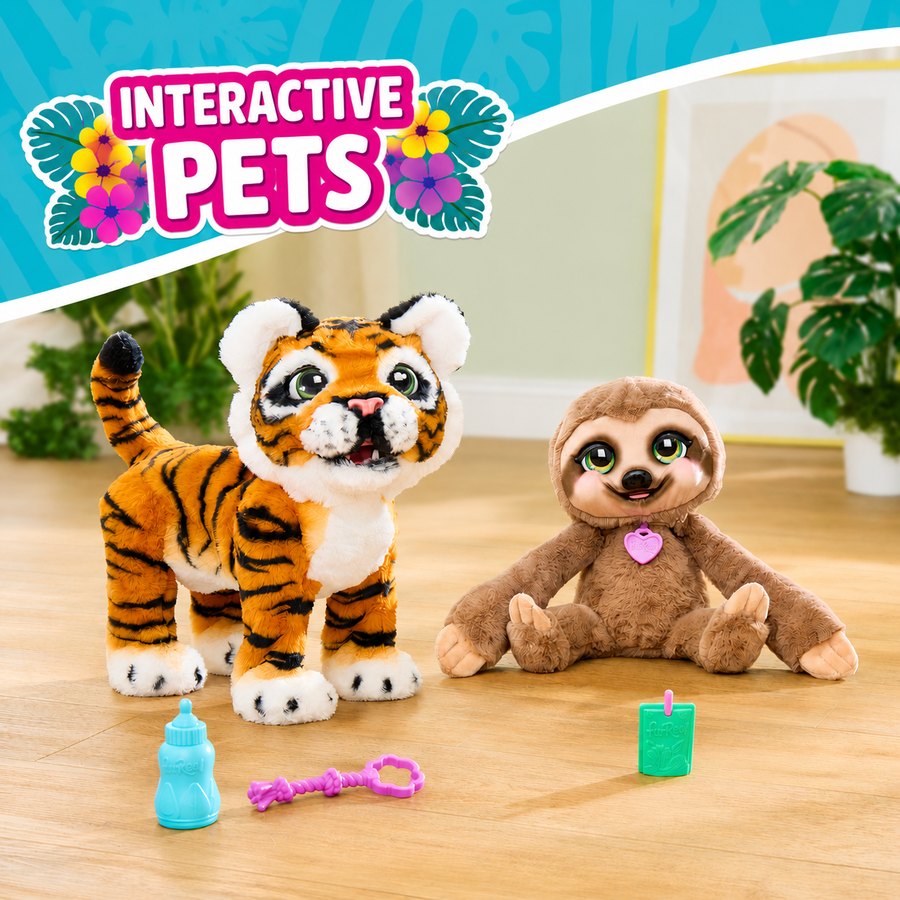 Interactive Pets16 pets · The pets with the longest memory for a good scratch
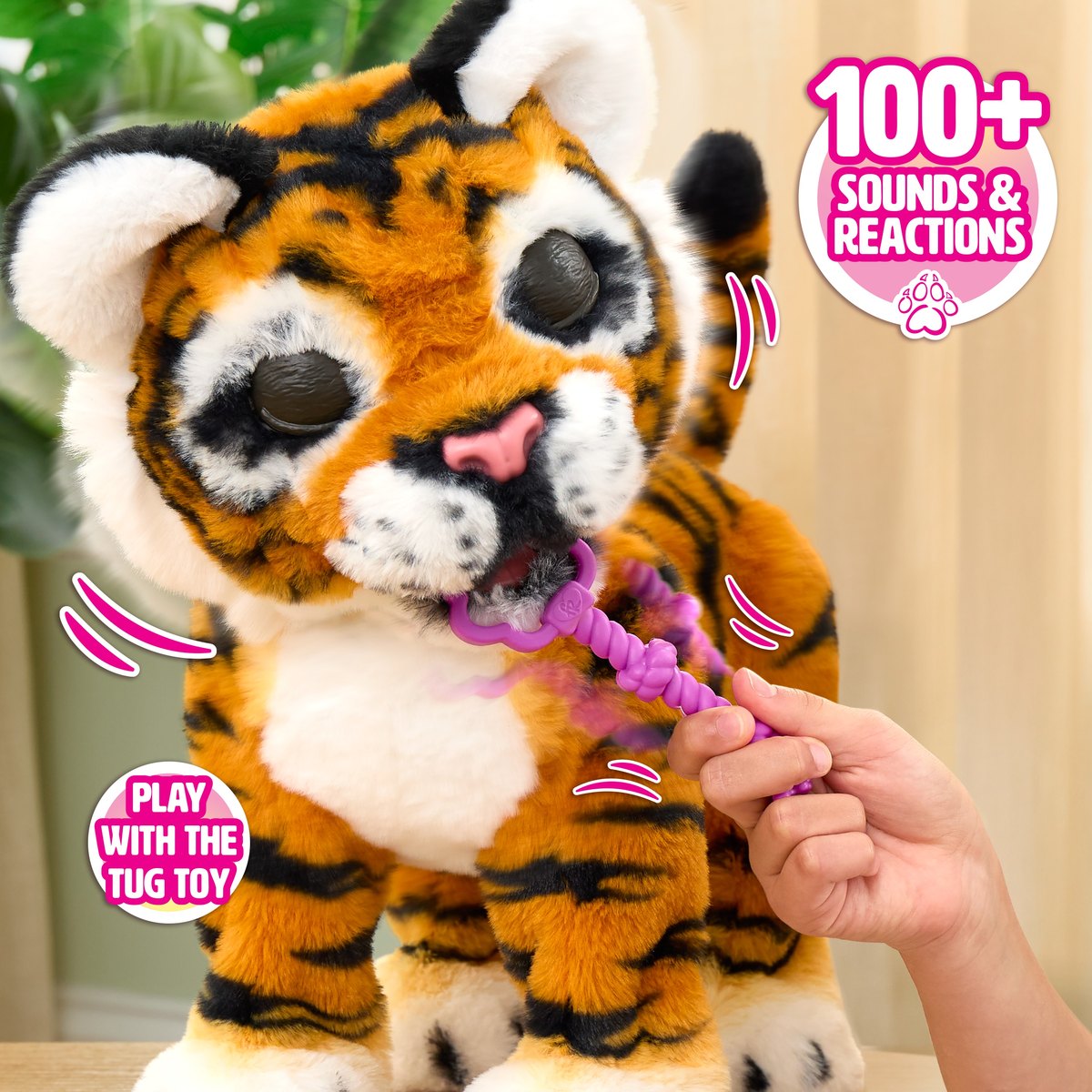 Feed & Follow11 pets · Hungry, then happy, then following you round the kitchen
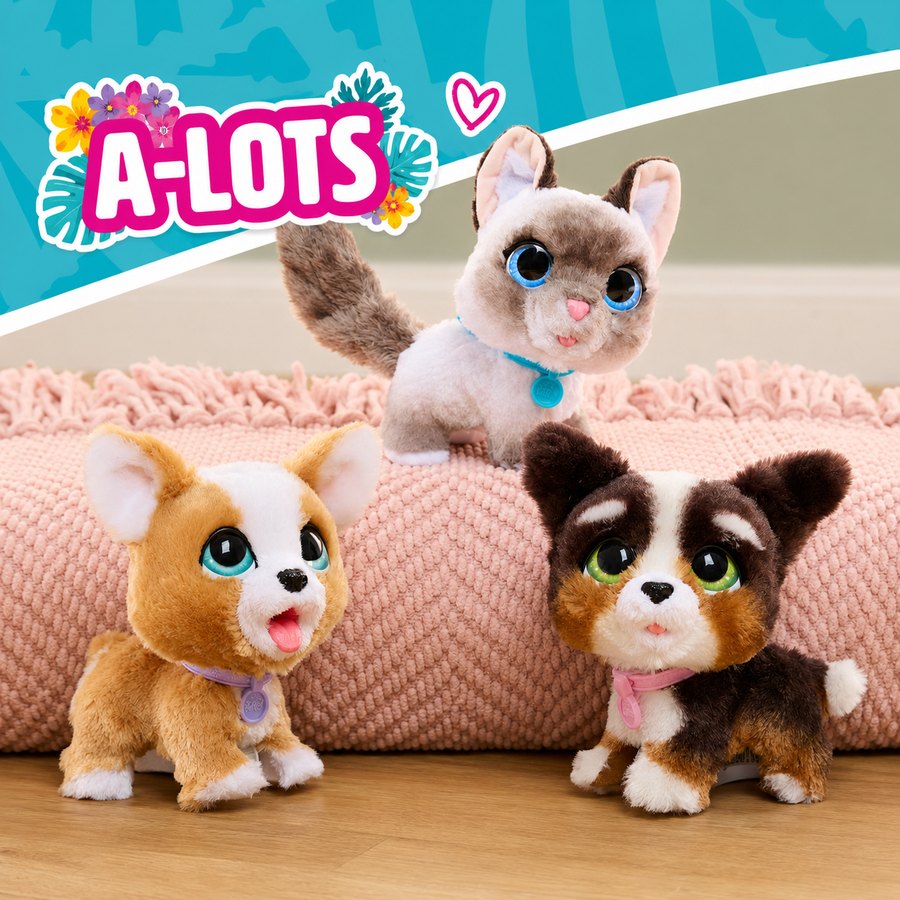 A-Lots10 pets · A leash, a lead, and a pup that goes where it is pointed
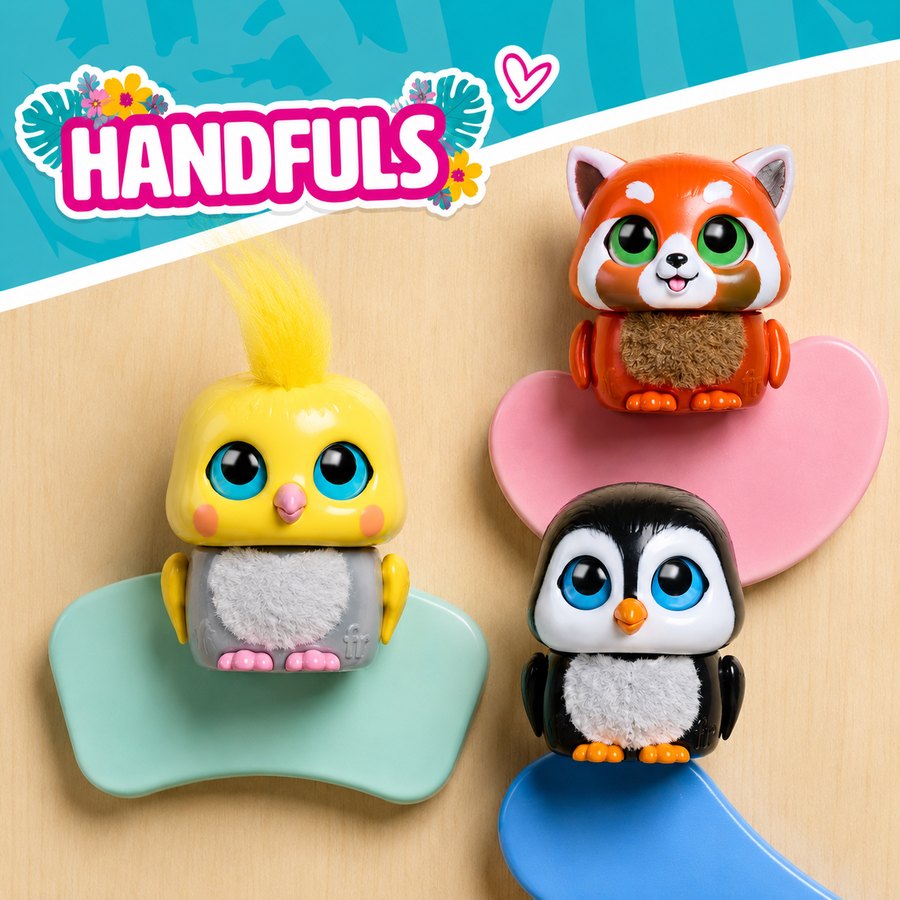 Handfuls & Minis11 pets · Pets that fit in a palm, a pocket and a school bag
Pets that answer back.
Reading done — the pets are one click away.